
DAWATEISLAMI MIDLANDS UK
Exploring Islam's Sacred Pilgrimage
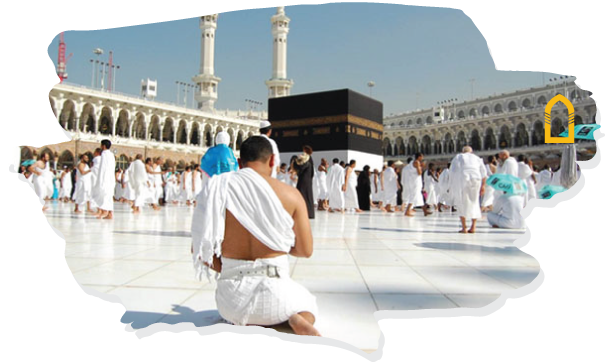
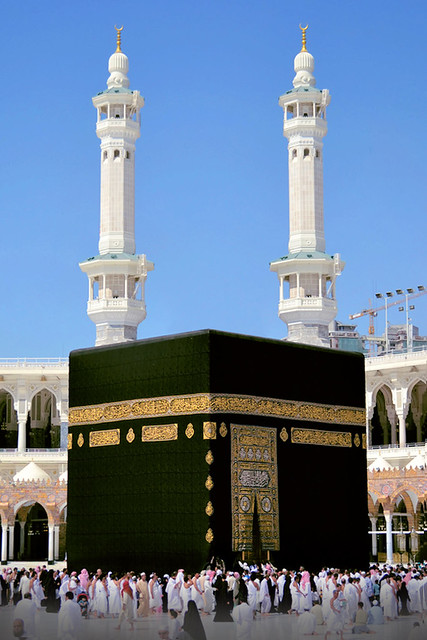
Participants undertake designated rituals in honour of Allah عَزَّ وَجَلَّ, with successful completion earning them the revered title of Ḥaji. Annually, millions converge in Mecca for the Hajj gathering, a testament to the unity and devotion of humanity before Allah عَزَّ وَجَلَّ.
Significance of Hajj
The pilgrimage offers spiritual cleansing and forgiveness for past transgressions, emphasising devotion and submission to Allah’s will. Quranic verses and Hadith highlight Hajj’s transformative power, echoing the faith of Prophet Ibrahim علیہ السلام and his family.
Types of Hajj: There are three types of Hajj
Qiran
-
Pilgrims simultaneously intend Hajj and Umrah upon entering Ihram.
Tamattu
-
Pilgrims perform Umrah before assuming Hajj Ihram.
Ifrad
-
Pilgrims solely undertake Hajj without Umrah.
Each type has specific rituals and eligibility criteria, accommodating the diverse circumstances of pilgrims.
Blessings and Rewards
Hajj brings abundant rewards, The Prophet ﷺ said: “The reward of an accepted Hajj is not less than Paradise.” It was humbly asked, “What is meant by Maqbool (accepted)?” It was replied, “The Hajj in which food is given and good conversation is made.” (Al-Mujam-ul-Awsat, vol. 6, pp. 173, Hadees 8405)
Indications of an accepted Hajj include spiritual transformation, abandonment of sinful acts, and a commitment to righteousness. Scholars emphasize sincerity, humility, and post-pilgrimage conduct as indicators of acceptance.
In essence, Hajj is not just a physical journey; it’s a spiritual odyssey that purifies the soul, strengthens faith, and fosters unity among believers, echoing the profound teachings of Islam.

Hajj e Badal
Dawat-e-Islami provides support for completing Hajj e Badal.
Hajj e Badal involves one person fulfilling the obligatory Hajj pilgrimage on behalf of another unable to do so themselves due to terminal illness, old age, or death.
According to Hadith (Dar Qutni, Vol. 2, PP. 329, Hadis 2587), the performer of this Hajj receives the reward of ten Hajj, while the one on whose behalf it is performed gains the reward of one Hajj.
Sponsor a Hajj e Badal
Pre-conditions of Hajj Badal
-
It is a condition that Hajj is Farḍ for the person who is having Hajj Badal performed on his behalf. If Hajj is not Farḍ for him and he makes someone perform Hajj Badal on his behalf, Farḍ Hajj will not get performed. That is, if Hajj becomes Farḍ for him later on, the previously performed Hajj will not suffice.
-
The person for whom Hajj Badal is being performed has to be in a state where he cannot perform it himself. If he can perform Hajj himself, Hajj Badal cannot be performed on his behalf.
-
The valid reason for getting Hajj Badal done has to remain from the time of the performance of Hajj till his death. In other words, if he regains the ability to perform Hajj himself anytime before his death, the previously performed Hajj Badal will no longer remain sufficient.
-
However, if the reason was such that there was no possibility of cure for example, he was blind but gained his eyesight amazingly, the Hajj Badal performed on his behalf would still be valid in this case.
Muslims have been practicing Hajj Badal since the time of the Beloved Rasool ﷺ.
Choose Dawat-e-Islami to facilitate the completion of Hajj e Badal.